
E-Invoicing Will Be Mandatory in Germany Starting in 2027: Is Your Company Prepared?

Effective January 1, 2027, the issuance of structured e-invoices will become mandatory in Germany for companies with prior-year revenue exceeding 800,000 euros. E-invoices must then generally be issued for domestic B2B transactions.
Introduction
- Effective January 1, 2027, the general transitional provision for issuing invoices will end for companies with prior-year revenue exceeding 800,000 euros.
- As of January 1, 2028, the transition periods will also expire for companies with prior-year revenue of 800,000 euros or less.
- A simple PDF is no longer considered an e-invoice. Structured, machine-readable invoice data is required.
At the same time, the transition offers an opportunity to fully digitize invoicing processes, reduce errors, and eliminate manual work in the long term.
Time remaining until introduction of the regulation
Regulatory context
What is considered an e-invoice in Germany?
As of January 1, 2025, an invoice is considered an e-invoice only if it is issued, transmitted, and received in a structured electronic format and allows for electronic processing.
A standard PDF sent by email no longer meets this definition and is considered an “other invoice.”
What file formats are allowed?
The established formats that meet the legal requirements in Germany include, in particular:
- XInvoice
- ZUGFeRD version 2.0.1 or later, with the exception of the MINIMUM and BASIC-WL profiles
Other structured formats may also be used, provided they meet the legal requirements and the information required for value-added tax purposes can be processed electronically in a correct and complete manner.
Flexible Transmission Methods
Germany does not require the use of a central platform or a specific transmission method.
E-invoices can be transmitted, for example, via email, interfaces, portals, or appropriate networks. Peppol can also be used as a standardized transmission method.
This provides flexibility—but at the same time places greater demands on companies in terms of integration, format management, and validation.
Retention of Electronic Invoices
Incoming and outgoing invoices must generally be retained for eight years. For electronic invoices, at least the structured data portion must be stored in such a way that it remains intact in its original form.
Timetable for the introduction
Who is affected by the regulation?
- Domestic companies with domestic B2B sales
- Transactions that are not subject to reporting or are exempt from the requirement to issue invoices include, among others, B2C sales, services provided by small businesses, invoices for small amounts up to 250 euros, transportation tickets, and certain tax-exempt transactions.
- Foreign companies without a permanent establishment in Germany are generally not affected
What Companies Need to Keep in Mind
The following aspects, among others, should be taken into account:
- Integrate ERP, billing and accounting systems
- Ensure the ability to receive structured formats (XRechnung, ZUGFeRD)
- Set up validation processes to detect errors before shipment
- Check archiving solutions for GoBD compliance and make adjustments as necessary
- Customize internal processes for approvals, status tracking, and audit trails
A well-planned implementation creates long-term benefits:
- Automated, end-to-end invoicing processes
- fewer manual interventions and errors
- Greater transparency regarding invoice status
- lower compliance risks, for example, regarding input tax credits
- a scalable foundation for additional international e-invoicing mandates
How Retarus supports
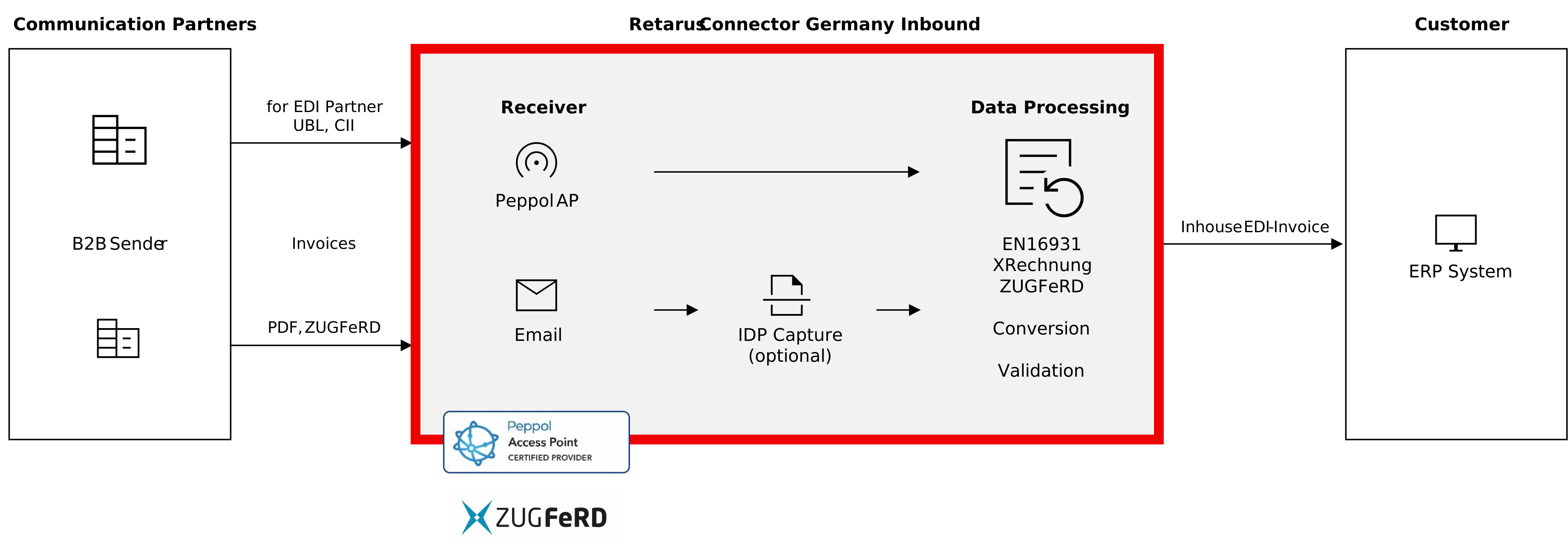
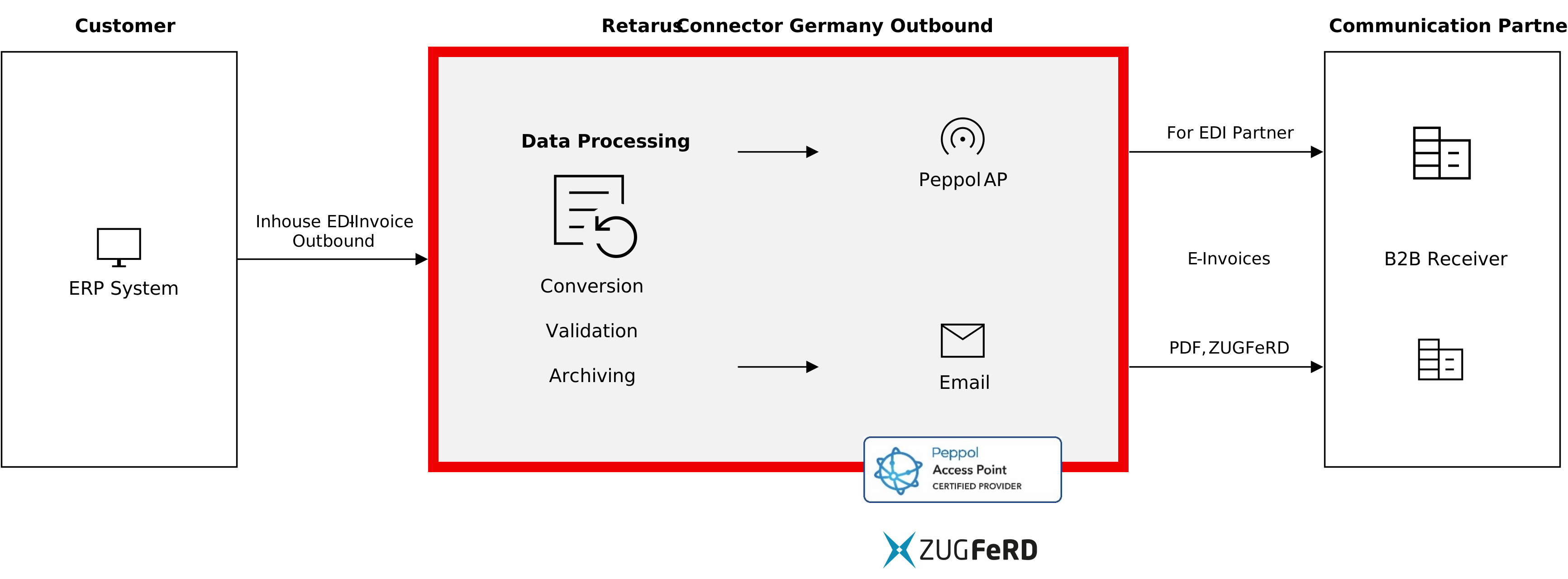
Making E-Invoicing Future-Proof
With Retarus, you can rely on a legally compliant, scalable, and future-proof e-invoicing solution for Germany and worldwide. It can be integrated into existing systems and processes while also creating a scalable foundation for additional international e-invoicing mandates. When developing your e-invoicing strategy, keep not only the next deadline in mind, but also your company’s long-term requirements.
Schedule an appointment with our e-invoicing experts