

While many companies currently have their eyes fixed on the e-invoicing requirements coming into effect in France and Germany, significant changes are also underway in Scandinavia. The past few weeks have seen Denmark and Norway laying significant groundwork for the introduction of mandatory electronic invoicing. CFOs and legal executives at companies operating internationally would therefore be well advised to take a closer look at the new timelines. Both countries are pursuing a clear Peppol approach, which aligns well with established European compliance strategies.
Denmark: Upcoming technical update, strategic transformation by 2029
In the short term, a technical update is pending: On August 12, 2026, the Danish Business Authority is set to update the NHR (Nemhandelsregistret) interface, which provides access to centralized registration details for the e-invoicing infrastructure. The changes primarily affect the API’s JSON response structures. Companies operating their own integrations or connecting to third-party service providers are recommended to promptly review their parsing logic.
New additions include:
- The boolean fields “ActiveInDkSml” and “ActiveInEuSml”, which indicate whether registry entries exist in the Danish or EU-wide SML (Service Metadata Locator)
- “CertificateBindings” for managing certificates at the receiving service
- “DocumentStandardId” and “NetworkTypeId” at the profile level
The Danish authority provides additional details about the technical changes at nemhandel.dk.
However, another development holds greater strategic significance. At the Nemhandel Forum in May, the Danish Business Authority confirmed that Denmark plans to adopt a uniform specification called “Nemhandel e-Invoice” – based on the international Peppol BIS 4 standard. The consultation phase received almost universal support from market stakeholders and has now been concluded.
The roadmap at a glance:
| January 1, 2027 | Finalization of the Nemhandel e-Invoice concept |
| November 15, 2027 | Release candidate for testing |
| May 15, 2029 | Full rollout of Nemhandel e-Invoice |
For companies with subsidiaries based in Denmark, this means that some time still remains before the transition has been completed. Nevertheless, companies should already be incorporating the transition to Peppol BIS 4 into their medium-term IT and compliance roadmaps.
Norway: Launch of mandatory e-invoicing confimed for 2027
In Norway, the timeline is already more clearly defined. On June 19, 2026, through a King in Council resolution, the Norwegian government confirmed that mandatory e-invoicing would take effect on January 1, 2027. As of that date, all businesses required to maintain accounting records are obliged to issue electronic invoices for B2B transactions. The law defines an e-invoice as a structured electronic sales document which can be processed in an automated manner by an accounting system.
Key details:
- From January 1, 2027, all companies subject to Norwegian accounting regulations must be able to issue e-invoices to other companies listed in the ELMA registry. This also applies to foreign companies registered for value-added tax (VAT) in Norway.
- From January 1, 2030, companies will be required to adopt digital accounting. This, in turn, demands accounting systems that can automatically receive and process e-invoices. As of this same date, the ability to receive e-invoices will also become mandatory – contingent on any transitional arrangements yet to be decreed by the Ministry of Finance.
In practice, it is expected that the Elektronisk Handelsformat (EHF), based on the EU‘s EN 16931 standard and already mandatory for public procurement (B2G), will be adopted as a common format. It is also worth noting that the ministry has signalled its intention to align the legal definition of an “electronic invoice” with the EU’s ViDA (VAT in the Digital Age) framework. The move would clearly indicate a commitment toward Europe-wide interoperability.
Norway’s tax authority will specify the exact format requirements and any exceptions by way of regulations or individual rulings.
The Norwegian government’s official statement can be accessed at regjeringen.no
How are companies impacted?
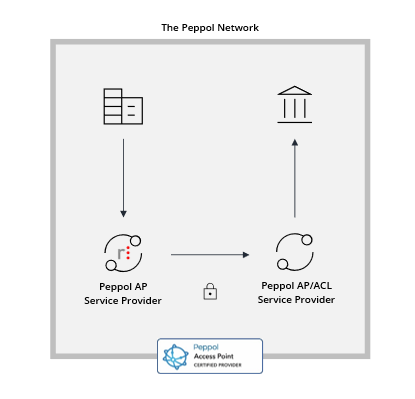
Both countries reflect a wider trend in Europe and beyond. Peppol and EN 16931 are increasingly establishing themselves as shared foundations for mandatory e-invoicing. For CFOs and legal teams with subsidiaries or business dealings in Scandinavia, this means:
- The situation in Norway already calls for detailed implementation planning. In less than six months, the issuing of e-invoices will become mandatory.
- With its timeline stretching until 2029, Denmark offers more lead time. However, given its alignment with Peppol BIS 4, it should be incorporated into the European compliance strategy at an early stage.
- Companies already using Peppol-based solutions are set to benefit from greater standardization across national borders.
We would be pleased to support you in integrating new e-invoicing requirements into your European compliance roadmap securely and reliably, no matter how many countries and formats are involved. Please feel free to get in touch with us.



Submit a comment